Ausangate trekking 5 days

Trip Length
Group Size
Activity Type
Hiking Adventure
Physical Level
Easy

Overview

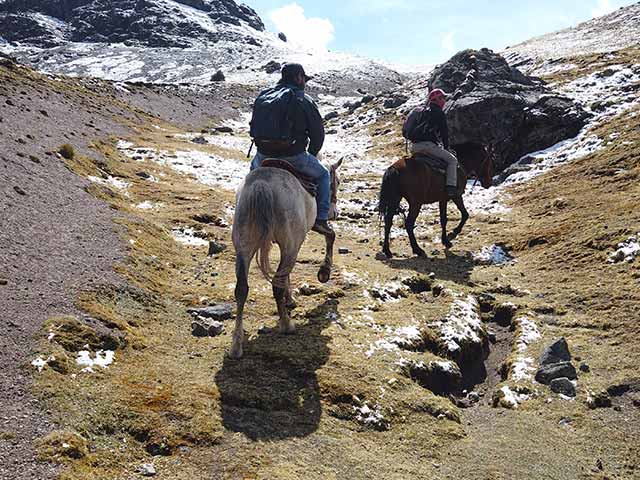
The Ausangate trek has been calling my name for a long, long time. It’s an ultimate adventure that feels untouched and wildly authentic, offering a real taste of Andean life. I’m craving that pervasive sense of remoteness, where you find modest communities and locals who still speak Quechua, the language of the Inca, and practice traditional ways of life. This is the further-flung spot on my list, a genuine Peruvian excursion that takes you firmly off the beaten path. I can’t wait to see the hundreds of alpacas and other wildlife, from majestic condors soaring high above to cheeky viscachas and elusive vicuñas.

Our new route for this five-day journey avoids the hoards of trekkers that have nudged their way into other areas, promising a truly wild and uninterrupted experience. I’m especially excited to see the Ausangate Mountain from every angle as we trek. But let’s not talk about the fact that this trek ends with the famously colorful Rainbow Mountain in the Vinicunca area. It’s an incredible, surreal landscape that I’m desperate to see for myself. We’ll even get to take a dip in two different hot springs along the way—a perfect, soothing antidote to a long day of hiking. This is the magical trip that finishes first on my hit list.

Our Compamny is a 100% locally owned and operated business, and they stand as one of the few travel agencies that doesn’t overload their pack horses. We’re talking a maximum load of 100 pounds (50 kilograms) per horse—it’s a humane approach I can get behind. I love that they treat their horsemen with respect, providing them with fair wages and all the proper gear, from trekking shoes to proper tents. This genuine care for the local community adds an extra layer of authenticity to the trip. The small group size—a maximum of eight people—is also a huge plus, ensuring a more intimate and personal experience. And they provide top-notch gear like Eureka tents and Black Diamond trekking poles, which means ache-less nights up in the mountains. Plus, there are satellite phones and portable, eco-friendly toilets—they’ve thought of everything.

Highlights

Itinerary

DAY 1: Starting the Trek to Upis

We’ll kick things off with a 6:00 a.m. pickup from your hotel in Cusco (11,155 feet / 3,400 meters). We’ll take a private transfer for two hours to Tinki (12,467 feet / 3,800 meters), where we’ll stretch our legs and check out the town. I’m excited to see people wearing their traditional clothing. We’ll then drive for another hour on some dusty roads to the trailhead. After a delicious breakfast, we’ll meet our horsemen and start the hike from Upispampa (13,710 feet / 4,179 meters).

The path is mostly flat with some minor ups and downs as we pass through remote villages and cross streams until we reach the small town of Upis. After about three hours of hiking, we’ll get to our campsite. This is a special one, as we’ll spend the night in private cabins. Once our chef prepares a delicious lunch, you have the option to take a two-hour round-trip hike to Upis Lake. The path is mostly flat before a gradual uphill climb. Afterward, we’ll relax in our cabins and enjoy a cup of tea while looking at the looming Ausangate Mountain through the window. After dinner, we’ll head outside to appreciate the stunning starry night sky.

  • Elevation Gain: 1,082 ft / 330 m
  • Elevation Loss: 183 ft / 56 m
  • Walking Distance: 4.9 miles / 8 km
  • Hiking Time: Approximately 3 hours
  • Trailhead Elevation: 13,710 feet / 4,179 meters
  • Campsite Elevation: 14,540 feet / 4,432 meters
  • Highest Point: 14,540 feet / 4,432 meters
  • Difficulty: Moderate
  • Accommodation: Cabins

We’ll get an early 5:00 a.m. wake-up call with coca tea delivered to our cabin. After packing up and having breakfast, we’ll start our hike up to the Arapa Pass (16,266 feet / 4,958 meters), which is a serious uphill climb. From there, we’ll descend slightly to our lunch spot near Lake Pucacocha. After a satisfying meal, we’ll start another uphill climb to the second pass, the Pucacocha Pass (16,404 feet / 5,000 meters). From there, it’s a couple of hours downhill to our campsite in Ananta, where we’ll spend the night in cozy mountain huts. Along the way, we’ll see different glaciers, lakes, alpacas, and llamas, and our guide will explain the area’s topography.

  • Elevation Gain: 2,900 ft / 884 m
  • Elevation Loss: 1,860 ft / 567 m
  • Walking Distance: 8.68 miles / 14 km
  • Hiking Time: Approximately 8–9 hours
  • Trailhead Elevation: 14,430 feet / 4,400 meters
  • Campsite Elevation: 15,400 feet / 4,700 meters
  • Difficulty: Difficult
  • Accommodation: Mountain Huts

You’ll be awakened at 4:00 a.m. with hot coca tea. After a nutritious breakfast, we’ll hike up to Surini Pass (16,571 feet / 5,051 meters). From the pass, you’ll get your first glimpse of the surreal, colorful mountains in the distance. We’ll then descend to Circle Lake and continue along a Peruvian flat trail until we reach Rainbow Mountain (16,404 feet / 5,000 meters) around 8:00 a.m. I can’t wait to see these iconic mountains and their surroundings. After taking it all in, we’ll hike down for about two hours to Alqatari (14,500 feet / 4,420 meters), where we’ll have lunch and dinner and spend the night in mountain huts. Along the way, we’ll hike through small villages and pass more llamas and alpacas.

  • Elevation Gain: 2,181 ft / 665 m
  • Elevation Loss: 2,860 ft / 872 m
  • Walking Distance: 9.942 miles / 16 km
  • Hiking Time: Approximately 7 hours
  • Campsite Elevation: 14,500 feet / 4,420 meters
  • Difficulty: Difficult
  • Accommodation: Shelter

After breakfast, we’ll begin our hike to the highest point of the trek, Palomani Pass (17,388 feet / 5,300 meters). At this altitude, you’ll feel like you’re in heaven, looking down at the vast canyons and valleys. Be aware that you might even see condors flying nearby. Once we reach the summit, we’ll be right at the bottom of Ausangate Mountain, which locals consider a protector. We’ll continue hiking past glacier peaks, bubbling streams, red lakes, and more chinchillas, alpacas, and llamas. We’ll arrive at Huchuy Phinaya for a delicious lunch and then hike another hour to our campsite at Surapampa (15,062 feet / 4,591 meters), which is located near a rocky area where we’ll see chinchillas.

  • Elevation Gain: 2,575 ft / 785 m
  • Elevation Loss: 2,273 ft / 693 m
  • Walking Distance: 8.69 miles / 14 km
  • Hiking Time: Approximately 7–8 hours
  • Campsite Elevation: 15,062 feet / 4,591 meters
  • Highest Point: 16,729 feet / 5,099 meters
  • Difficulty: Difficult
  • Accommodation: Tents

Today, we cross our final pass. We’ll start with a three-hour uphill hike to the last pass (16,568 feet / 5,050 meters). From here, you’ll get to see more glacier peaks and the seven lakes of Ausangate. We’ll then descend to our lunch spot in Pacchanta, where our cooks will prepare our last meal. In Pacchanta, there’s a lovely natural hot spring, which sounds like the perfect way to unwind after five days of intense hiking. After a relaxing soak, you can buy some handmade souvenirs from the local people. We’ll say our goodbyes to our horsemen and then take a private van for the three-hour drive back to Cusco, arriving at your hotel around 6 p.m.

  • Elevation Gain: 1,732 ft / 528 m
  • Elevation Loss: 2,673 ft / 815 m
  • Distance: 10.563 miles / 17 km
  • Highest Point: 16,568 feet / 5,050 meters
  • Hiking Time: Approximately 7–8 hours
  • Difficulty: Difficult

Inclusions

Included

  • Satellite phone: Since Ausangate is a remote area with no cell signal, the guide carries a satellite phone for emergencies.
  • Accommodation: A cabin for the first night, a mountain hut for the second and third nights, and a tent for the fourth night.
  • English-speaking guide with radio communication.
  • Pre-departure briefing at our office one day before the tour.
  • Portable private toilet tent.
  • Dining room with seats at some campsites to rest.
  • Professional cook.
  • Wake-up tea (coca tea, coffee, chocolate, or other tea) brought to your accommodation each morning.
  • Mules to carry all trekking gear.
  • Duffle bag for your 7 kg (15 lbs) of personal belongings.
  • Water provided daily (boiled and cooled).
  • Happy hour with hot tea, popcorn, and biscuits every afternoon.
  • Cloth bag for snacks to avoid plastic waste.
  • Snacks are provided every day.
  • Entrance fees for private lands and Rainbow Mountain.
  • Large dining tent, tables, stools, cutlery, and kitchen tent.
  • Spacious tents (3-person tents for 2 people) and Thermarest sleeping pads.
  • Meals: 5 breakfasts, 5 lunches, and 4 dinners with options for various dietary needs.
  • Private transportation to and from your hotel in Cusco.
  • Foam mattress.
  • First aid kit: Guides receive training and carry basic medications and a metal tank of oxygen.
  • Hygiene products: A bowl of water and paper towels are provided to wash your hands at every campsite.
  • Plastic poncho and rain cover for your backpack.

No Included

  • Sleeping Bag: A Mountain Hardwear sleeping bag can be rented for $25 for the trip.
  • Trekking Poles: Black Diamond hiking poles can be rented for $25 for the trip.
  • Personal Riding Horse: Can be rented as needed.
  • Voluntary Tips for the guide, driver, and cook.
  • Travel Insurance: Ensure it covers trekking at high altitudes.

What to Bring

What to Bring for the Ausangate Trek

  • Day pack with a rain cover.
  • Headlamp or torch with extra batteries.
  • Extra wool socks.
  • Layered clothing including hiking pants, shirts, and thermal underwear.
  • Waterproof clothing (rain jacket and pants or a poncho).
  • Water-resistant trekking shoes.
  • Camping shoes or sandals for evenings.
  • Warm clothing: fleece, hat, and gloves.
  • Sun protection: sun hat, sunglasses, sun cream, and lip balm with SPF.
  • Swimming suit for the hot springs.
  • Camera and extra batteries.
  • Reusable water bottle (such as a Nalgene).
  • Basic medications and a personal first-aid kit.
  • Cash for souvenirs and tips.
  • Personal items and snacks.

Ausangate Trek Packing List: Essentials

  • Passport: Bring your original passport if you want a stamp, or a photocopy otherwise.
  • Backpack: A 21-35 liter backpack with compression straps.
  • Waterproof Backpack Cover: Protect your backpack from rain.
  • Cash: Carry enough Peruvian soles for purchases and tips.
  • Camera: To capture the views.
  • Portable Power Bank: To charge your devices, as there is no electricity.
  • Waterproof Ziplock Bag: To protect electronics and documents.
  • Sunglasses: To protect your eyes from high-altitude UV rays.

Clothing

  • Underwear: Bring 5 pairs of moisture-wicking, quick-drying underwear.
  • Sports Bra (for ladies): Comfortable and supportive.
  • Base Layer: A snug, moisture-wicking layer of merino wool or synthetic material.
  • Trekking T-shirt: Lightweight and breathable.
  • Rain Jacket: A waterproof and windproof jacket with a breathable fabric like Gore-Tex.
  • Insulated Jacket: A lightweight, packable down or synthetic jacket.
  • Fleece Jacket: A versatile mid-layer for warmth.
  • Trekking Pants: Lightweight, quick-drying, and possibly convertible.
  • Pajamas: Warm thermal tops and bottoms.
  • Gloves: Insulated and water-resistant.
  • Sun Hat: A wide-brimmed hat to shield your face.
  • Headband or Beanie: For ear and head warmth.
  • Neck Gaiter: A versatile layer for protection from wind, dust, and cold.
  • Trekking Boots: High-quality, sturdy, and well-broken-in.
  • Camping Shoes: Lightweight and comfortable for camp.
  • Hiking Socks: Moisture-wicking and cushioned.
  • Gaiters (optional): To protect against mud and debris.

Sleeping Gear

  • Sleeping Bag: A 3-season sleeping bag is recommended for cold temperatures.
  • Camping Pillow: Compact and lightweight for comfort.

Trekking Equipment

  • Trekking Poles: Provide stability and reduce joint stress.
  • Headlamp: Ensures visibility at night.
  • Water Bottle or Camel Bag: For easy hydration.
  • Trekking Towel: Compact and quick-drying.

Toiletries & Personal Items

  • Toothbrush and Toothpaste: For oral hygiene.
  • Biodegradable Soap and Shampoo: To protect the environment.
  • Sunscreen (High SPF) and Lip Balm with SPF.
  • Deodorant and Moisturizer.
  • Wet Wipes and Toilet Paper.
  • Hand Sanitizer.
  • Feminine Hygiene Products (if applicable).
  • Small Towel.
  • Comb or Hairbrush and Mirror.

Health & First Aid

  • General Medication: Carry any prescription and personal medications.
  • First Aid Kit: A compact kit with bandages, antiseptic wipes, and pain relievers.
  • Blister Plasters: To protect against blisters.

Inquiry now

Contact Form Demo

Why Choose "Peru Day Tours" for your next adventure

...
OUR TOUR GUIDES

A highly qualified professional with extensive experience in the art of guiding will lead your tour. They have years of dedication to nature walks, have medical certifications and an overflowing passion for leading people on unforgettable adventures.

...
OUR CHEFS

We understand how essential a delicious hot meal is to revitalize and comfort your body after a challenging hike. Therefore, on each expedition with Ausangate Peru, you will find chefs with extensive experience in preparing meals during the hikes.

...
MEALS: WHAT YOU CAN EXPECT

All our hiking trips offer a varied selection of delicious meals, rich in carbohydrates, proteins and essential fats. We have carefully selected foods that adapt perfectly to the natural environment.

...
OUR MULEETERS AND HORSES

Our experienced muleteers and their faithful horses are responsible for all our equipment and will always be available in the safe and comfortable camps, ready to receive us.

Travel Guide

AUSANGATE HIKE TIPS

When walking the Ausangate walk, following certain guidelines will help keep you safe. Choosing the right time to visit is important to avoid heavy rain and landslides. Adjust to the altitude before starting your hike and stay hydrated to avoid altitude sickness. Buying travel insurance will help you in case something goes wrong. Read the trekking tips below for more details on safety and other useful information to help you plan your trip.

Choose the best time to travel for you.

Excessive rain from December to February can erode the trail and even create landslides. Not only is it unpleasant to walk in these conditions, but it can also be dangerous. If you are hiking during the rainy season, listen for updates from Peruvian authorities on hiking conditions.

Be prepared for the high altitude.

Spend at least 2-3 days in Cusco or the Sacred Valley before embarking on the trek. You will enjoy the hike more once your body has had time to acclimatize. If you feel like you have symptoms of altitude sickness, take a break and don’t overexert yourself.

Tell others about your plans.

When traveling independently, keep an itinerary of your trip at home with family and friends. There is no telephone reception on the Ausangate Trek, making it impossible to communicate in an emergency. Informing others of your plans will allow them to seek help if they have not heard from you.

Practice your Spanish.

Most locals in these remote Andean towns do not speak English. Knowing at least a few basic phrases or having a dictionary on hand can help you communicate if necessary.

Drink plenty of water.

If you are trekking through a reputable travel agency, your trekking company will be able to provide you with water. If you are hiking on your own, be sure to use water purification tablets before drinking water from natural sources. Staying hydrated is especially important to prevent symptoms of altitude sickness.

Buy travel insurance.

As with any outdoor adventure activity, the Ausangate hike can be unpredictable. Cancellations may occur due to weather, landslides, etc. There is also a risk of injury or illness. For peace of mind, invest in a comprehensive travel insurance plan that covers you throughout your trip.

How to get there

Lima is the nation’s bustling capital and travel hub, where all but a few international flights land. From there, you must connect to a domestic flight to Cusco. There are many flights per day and the trip only takes about 1 hour. Several airlines fly this route, including some low-cost options. However, the most reliable option is LATAM.

Cusco is the base for the most popular hikes in the region. From here, organize the Ausangate trek with a reputable travel agency, who will take care of all the logistical details. Your guide will meet you at your hotel and take you to the trailhead. At the end of the tour, you will be dropped off at your hotel.

Accommodation in Cusco

You will need to arrange accommodation in Cusco before and after your hike. There is a wide variety of hotels available, ranging from cozy family inns to luxurious 5-star resorts. While there are options to fit all budgets, it may be worth splurging on your hotel. After such an adventurous hike, reaching a comfortable place for a well-deserved rest will surely be worth it.

Mountain of Colors Vinicunca

If you want to visit the Vinicunca colorful mountain, be sure to plan ahead. When organizing your trek with a travel agency, inform them in advance. Not all trekking companies include it in their itinerary by default. The dry season is the best time to see the vivid colors of the mountain as shown in the photos. During the rainy season, it can often be covered in snow, leaving travelers disappointed. Unlike the rest of the Ausangate hike, the Vinicunca colorful mountain is very popular with tourists, so be prepared for large crowds.

You can tailor our tours to your preferences, and they re available every day of the year! Our team of travel experts is here to assist you with enthusiasm.

Related Trip Experiences

Contact us

Contact Form Demo

BOOK NOW

Book now