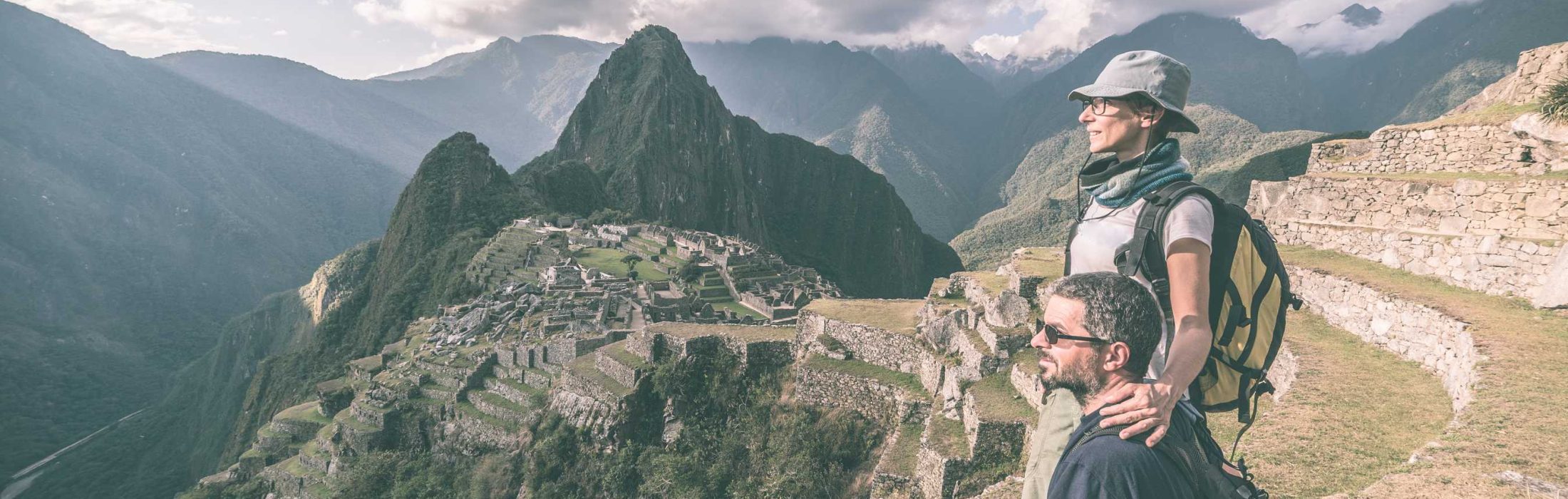
This trip has been living rent-free in my head for ages, and I am absolutely desperate to make it a reality. I’m talking about the Inca Jungle Trail to Machu Picchu, a journey that’s a pure shot of adrenaline, culture, and jaw-dropping scenery. It’s a dream trip that’s been nudged its way to the top of my travel hit list.
This isn’t your typical trek. Forget a singular, grueling hike. This is a multi-sport adventure packed with a variety of epic activities, from mountain biking to rafting and even zip-lining. It’s a fantastic alternative to the classic, more strenuous treks, condensing all the excitement into three unforgettable days without sacrificing any of the thrills. It all culminates in that one-of-a-kind, magical moment when you finally lay eyes on Machu Picchu, the legendary Lost City of the Incas. I’ve been craving this for so long.
I can’t wait to dive into the adventure, knowing I’ll be part of a diverse group of travelers, each with their own pace and story. It’s all part of the journey. Our expert guides are masters at making sure everyone feels safe and included. However, if you and your crew are on the same page about fitness and want to set your own pace, a private tour is the way to go. Just saying.
This is where we kick things off. We’ll be picked up from our hotel at 7:00 a.m. in the vibrant city of Cusco, sitting at an altitude of approximately 11,152 feet (3,400 meters). From there, we’ll head to Ollantaytambo for a quick breakfast stop before continuing on our private bus for three hours. Our destination is the bike drop-off point, affectionately known as “El Aeropuerto,” which sits near Abra Málaga at a dramatic altitude of 14,160 feet (4,316 meters).
After a thorough safety briefing and getting kitted out with all the necessary gear, we’ll start our exhilarating three-hour, 34-mile (55-kilometer) descent by bike. The landscape is just incredible. We’ll ride all the way down to the village of Huamanmarca before taking a short 30-minute transfer by car to Santa María, where we’ll have our first lunch. The day finishes with a transfer to Santa Teresa, where we can finally unwind and soak in the soothing hot springs. We’ll be staying in a local family hostel tonight, which will be a lovely authentic experience.
After breakfast, we’ll start our walk around 7:00 a.m., heading for the bustling town of Aguas Calientes. We’ll trek for about three hours through the Aobamba Valley until we reach the Intihuatana sector, where we’ll have a brief government checkpoint. From there, we’ll continue to Inka Rakay for lunch. Along this route, you’ll be treated to a series of stunning waterfalls and get your first glimpses of the majestic mountains of Machu Picchu and Huayna Picchu, as well as the solar clock of Intihuatana towering over the Inca citadel. The last three hours of our hike will follow the railway line directly to the town of Aguas Calientes, our home for the night.
Today’s the day! You have two options to get up to the citadel. You can take a vigorous 90-minute hike up a steep path, which is a great way to up your step count, or you can take the bus.
| Bus Fares | Price (USD) |
| One-way ascent | $12.00 |
| Round trip (ascent and descent) | $24.00 |
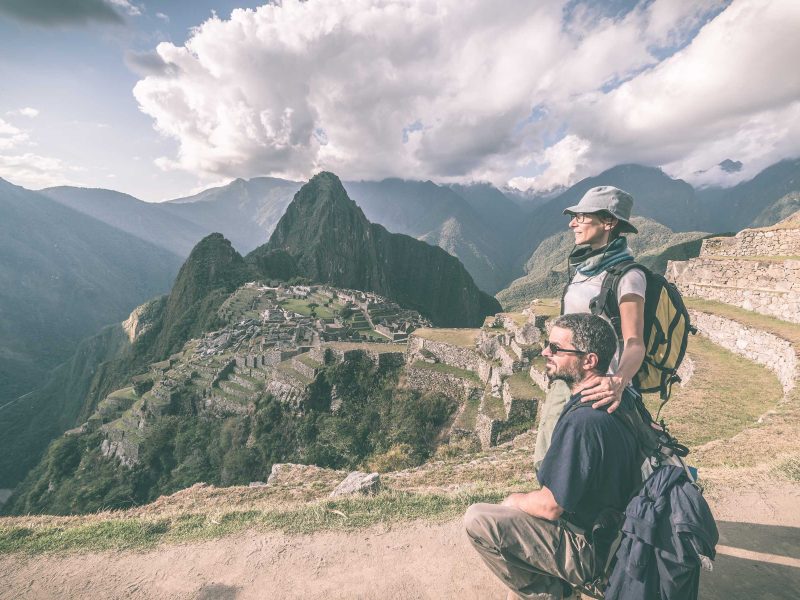
Once we arrive at Machu Picchu (8,175 feet / 2,490 meters), our guide will lead us on a two-hour tour. Our primary ticket for the citadel is Circuit 2: Llaqta Machu Picchu / Classic Route 2-A, which gives you access to the iconic panoramic viewpoint and covers about 70% of the site. If that’s unavailable, we’ll secure Circuit 2-B: Lower Terrace, which also includes the classic viewpoint and covers 60% of the city. We highly recommend booking 3 to 4 months in advance to secure one of these circuits. If all else fails, we’ll get you a ticket for Circuit 3 so you still have an incredible experience. After the guided tour, you’ll have plenty of time to explore the rest of the citadel on your own, including a visit to the Sun Gate (Inti Punku).
Following our visit, we’ll head back to Aguas Calientes to grab lunch at one of the many restaurants. Afterward, we’ll catch our train to the Ollantaytambo station. The train ride is about 1 hour and 40 minutes and offers incredible views. A transfer will be waiting to take us back to Cusco, a drive of around 1 hour and 40 minutes, which will bring our epic adventure to a close.
A highly qualified professional with extensive experience in the art of guiding will lead your tour. They have years of dedication to nature walks, have medical certifications and an overflowing passion for leading people on unforgettable adventures.
We understand how essential a delicious hot meal is to revitalize and comfort your body after a challenging hike. Therefore, on each expedition with Ausangate Peru, you will find chefs with extensive experience in preparing meals during the hikes.
All our hiking trips offer a varied selection of delicious meals, rich in carbohydrates, proteins and essential fats. We have carefully selected foods that adapt perfectly to the natural environment.
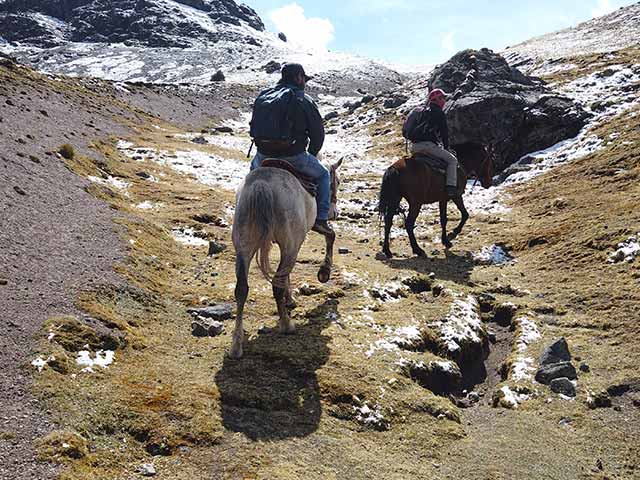
Our experienced muleteers and their faithful horses are responsible for all our equipment and will always be available in the safe and comfortable camps, ready to receive us.
In general, the climate in this area is usually hot and humid, as you pass through the Amazon rainforest. But be careful! The coldest point will be in Abra Málaga because you will be at 4,350 meters above sea level / 14,272 feet and at a temperature of 09 °C / 48.2 °F.
The time spent in the highest area of the route is very short, since the Inca Jungle trek route mostly focuses on the Amazon jungle.
The highest peak you will reach will be at Abra Málaga at just over 4300 m (14,108 ft). From this point, you will descend relatively quickly while cycling.
For most of the route, the altitude does not exceed 2,000 m (6,562 ft). Machu Picchu sits at 2,430 m (7,972 ft) which is relatively low. This means that altitude sickness in the Inca Jungle does not occur in travelers or is too rare.
Experiencing mild altitude sickness such as headache, dizziness or nausea is very common for visitors to Cusco. It is important that you acclimatize for a few days in Cusco before doing the Inca Jungle trek.
Travel insurance for your trek is a must as most operators will require you to carry one.
Check that your chosen insurer covers mountain biking and rafting on the Urubamba River.
The Inca Jungle, as its name suggests, runs through jungle landscapes full of vegetation. For safety reasons, it is not recommended to do the route in the rainiest months: January, February and March. These can cause landslides and accidents to people. This adventure can be carried out the rest of the year.
If you chose this tour to visit Machu Picchu, do not forget to bring appropriate clothing for hiking as well as personal hygiene items. Don’t forget to bring bathing clothes and a towel to better enjoy the Cocalmayo thermal baths on the second afternoon. Sunscreen, a cap, mosquito repellent and a poncho in case of rain are also recommended.
All Inca Jungle tours include the basic entrance to Machu Picchu that allows you to tour the archaeological site and get the classic postcard photos. For an additional cost, the visitor can add entry to Huayna Picchu Mountain, a short hiking route at the top of the site.
During the four days of the route the weather will be hot most of the time. The geography is mountainous but with abundant tropical flora and fauna. The flora is made up mainly of fruit plantations, coffee plantations and the beautiful orchids of Machu Picchu. The fauna is made up mainly of birds such as the cock-of-the-rock or mammals such as the Andean deer.